You can add a deadbolt to many front doors, but not every door accepts every model or drilling plan. The decision turns on the actual door, its preparation, the frame, and the hardware maker’s instructions. Check those items before buying hardware or drilling.
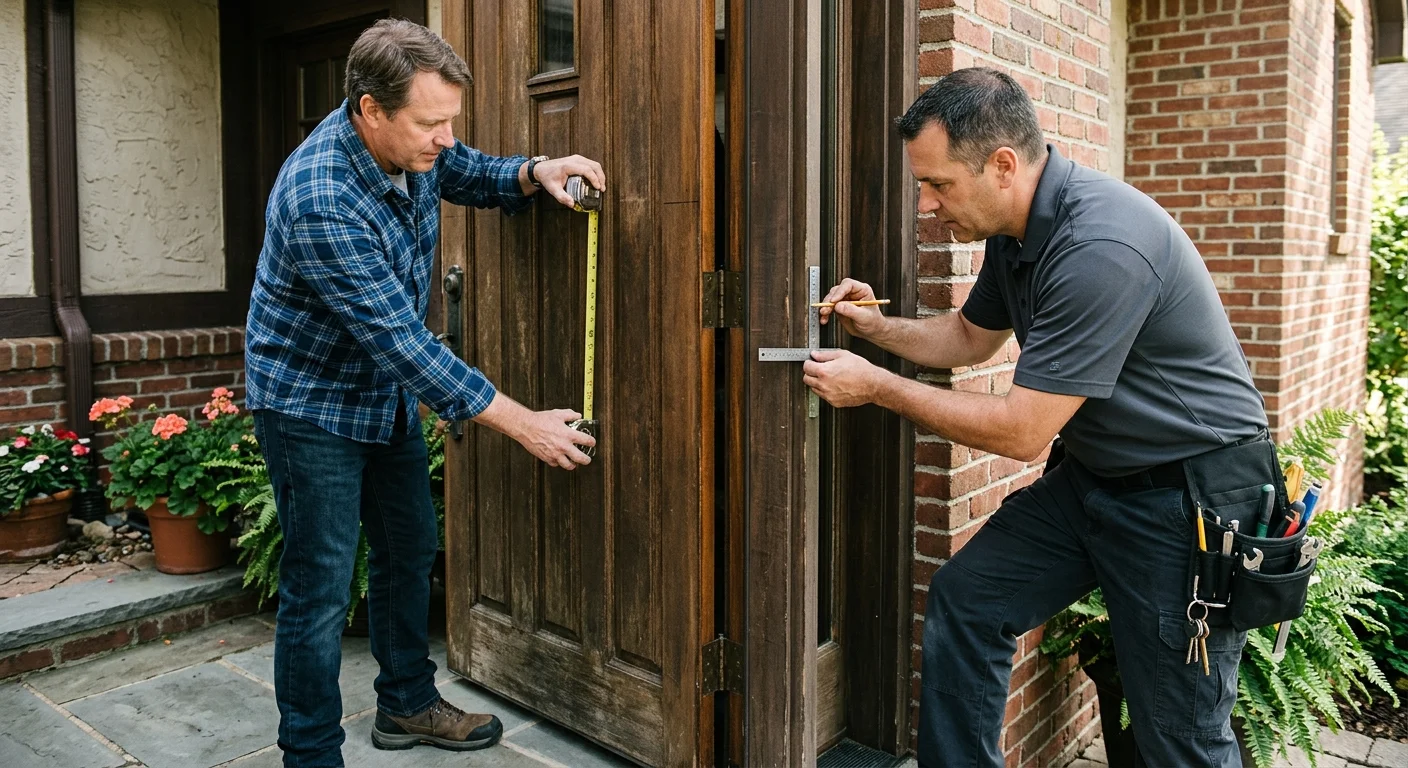
Check the door material and existing preparation
Start with the door you have, not the deadbolt package. Open it and examine the face, edge, and frame. Note the apparent material, existing openings, old hardware marks, labels, repairs, and areas that feel loose.
A prepared door may already have an opening through its face and another at the edge. An unprepared door won’t have the openings required by the chosen hardware. Partial preparation is also common. For example, a previous lock may have left an opening that doesn’t match the new model’s template.
Don’t assume an existing round opening makes every door deadbolt compatible. Compare its position and dimensions with the manufacturer’s current instructions. If the instructions don’t address your door material or preparation, ask the manufacturer before modifying the door.
Look for a manufacturer label along the door’s edge or top. Record any model information you can read. Take clear photos of the face, edge, frame, and existing lock. Those details help a locksmith evaluate the door without relying on guesses.
San Diego has a meaningful mix of older housing. About 49.6% of homes in the city of San Diego were built before 1978. That figure doesn’t establish the age or condition of a particular front door. A door, frame, and lock can each require their own inspection.
If you’re still deciding between hardware styles, review the main types of door locks used in San Diego. Choose a specific model before making irreversible changes.
Measure the bore, backset, and door thickness
The chosen deadbolt’s installation sheet is your measurement guide. It should show where the manufacturer expects each opening and how the lock sits on the door. Use that exact document instead of copying measurements from existing hardware or another brand.
The bore is the opening through the door’s face. Backset describes the placement of that opening relative to the door edge. Door thickness is measured across the door itself. Record each measurement separately, then compare all three with the listed requirements.
Don’t treat a close measurement as an automatic match. Recheck where you placed the tape or ruler. Photograph each measurement so the position remains clear. If your result sits near a manufacturer’s stated limit, confirm compatibility with the manufacturer or a licensed locksmith.
Requirements can differ by model. For one verified example, Schlage lists its residential B60 deadbolt for doors from 1-3/8 inches to 1-7/8 inches thick. That range belongs to the B60. It shouldn’t be applied to another deadbolt without checking that model’s documentation.
Also compare the supplied components with the instructions. Don’t mix an old template, a new lock, and assumptions from a different product line. Model names can look similar while referring to different hardware.
Write the measurements down before shopping. Bring the photos and the exact deadbolt model when asking for help. A useful compatibility answer should identify both the door conditions and the hardware being considered.
Inspect the frame before choosing hardware
A door deadbolt depends on more than the opening in the door. The frame needs a suitable location for the bolt and the hardware specified by the manufacturer. Inspect that area before deciding the door is ready.
Close the door gently and examine how it sits in the frame. Note uneven gaps, rubbing, movement, old strike openings, patched areas, split material, and loose pieces. These observations don’t diagnose the cause, but they show where further evaluation may be needed.
Check alignment with the door both open and closed. A bolt that appears free with the door open may meet a different position at the frame. Don’t force the hardware or enlarge an opening simply to make it move. Stop and determine why the parts don’t line up.
The frame also matters when evaluating broader front door security improvements. A lock’s published grade doesn’t describe every door and frame condition. For example, Schlage publishes the B60 as Grade 1 under ANSI/BHMA A156.36-2010. That grade isn’t a resistance time, burglary rating, or guarantee.
Specific test figures behind that standard haven’t been confirmed in the approved source material. Don’t rely on unsourced cycle counts, force claims, or promises based only on a grade label. Use the manufacturer’s published classification as one product detail, then inspect the complete opening.
If the frame is damaged, heavily patched, or out of alignment, have the condition assessed before choosing the final hardware. Installing a new lock doesn’t answer what caused the frame problem.
Why gates and metal doors need separate checks
A metal door or exterior gate shouldn’t be treated like a standard prepared wood door. Start again with the manufacturer’s documentation. Confirm that the deadbolt is listed for the door or gate type in front of you.
For a metal door, look for labels, existing factory preparation, removable plates, and previous modifications. Don’t drill based only on a paper template intended for another construction. If you can’t confirm what lies within the drilling area, stop before cutting.
Gates present another set of fit questions. Examine the gate while fully closed. Record the space around the planned lock, the meeting point, nearby bars or panels, and the location the bolt would enter. Confirm that both sides of the selected hardware have the clearance required by its instructions.
San Diego County conditions aren’t identical from neighborhood to neighborhood. An exposed gate in Encinitas and a sheltered entry in El Cajon still need individual inspection. Check the actual material, finish, fasteners, and manufacturer guidance rather than choosing from the ZIP code alone.
Double-cylinder deadbolts need special consideration because a key is required to exit. No California building or fire-code rule covering that choice has been confirmed in this site’s approved source material. Ask your city building department or fire authority about the current requirements for that specific doorway before buying one.
Don’t remove or cover a door label while investigating compatibility. If a label appears relevant but you can’t interpret it, photograph it and contact the door manufacturer or the appropriate local authority.
When professional installation makes sense
Professional installation makes sense when the door is unprepared, measurements conflict, or the frame needs modification. It’s also a sensible choice when labels are missing, metal construction is unclear, or a gate doesn’t match the deadbolt documentation.
Before calling, gather the details that affect fit:
- Photos of both door faces, the edge, and the frame
- The apparent door material and any readable labels
- The bore, backset, and thickness measurements
- The deadbolt’s exact manufacturer and model
- A copy or link to the current installation instructions
- Photos of old openings, repairs, rubbing, or uneven gaps
Ask the locksmith to confirm compatibility before drilling. The answer should address the exact door, frame, and deadbolt model. If a different model is suggested, request its documentation and compare the requirements again.
California regulates locksmith work through the Bureau of Security and Investigative Services. You can check a company license or employee registration through the state’s Department of Consumer Affairs license search.
Swift Key San Diego doesn’t install locks or modify doors. We match callers with licensed, independent local locksmith professionals. The customer contracts with and pays the matched professional directly, and that professional sets the price.
Our deadbolt installation referral service can connect you with a local professional when the project requires more than a simple compatibility check. Share your measurements and photos during the conversation so the door’s condition stays central.
When to call us
Call when the door is unprepared, the frame needs modification, the measurements conflict, or gate and metal construction remain unclear. Those situations are good reasons to have a licensed locksmith confirm the fit before drilling. Call us at (858) 400-4082 and we’ll connect you with a licensed local locksmith.