When your door deadbolt turns while open but stops once closed, test both positions without changing the hardware. The contrast shows where the symptom appears, not what caused it.
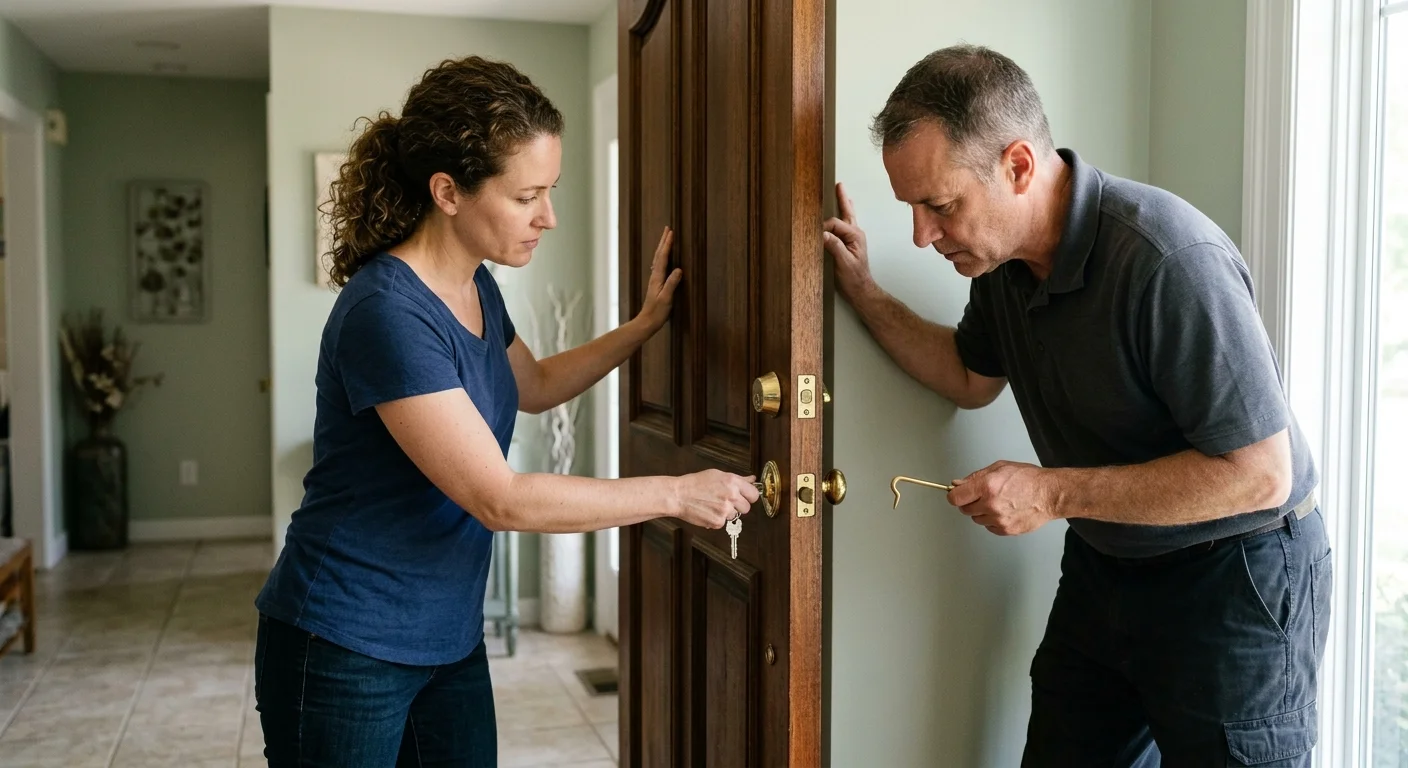
Test the bolt only with the door open
Start with the simplest comparison. Open the door and keep it steady. Turn the interior thumbturn slowly, then retract the bolt. If you normally use a key from outside, test that operation only while you have safe access through another opening.
Don’t force the thumbturn or key. You’re checking how the door deadbolt behaves without the strike involved. Note whether it completes its movement, stops partway, feels different at one point, or needs extra pressure. These observations are more useful than guessing what failed.
Repeat the movement once while watching the bolt. Keep your fingers away from the door edge. Check whether the resistance appears at the same point each time. Don’t loosen screws or remove hardware during this first test.
If the deadbolt also resists while the door is open, the problem isn’t limited to contact with the closed doorway. Stop there rather than trying to overpower it. Our broader deadbolt troubleshooting guide covers other symptoms that may appear with the door open.
If the bolt moves freely while open, close the door gently for the next comparison. Don’t slam it or pull hard on the handle. The useful finding is simple: the bolt completes its movement open, but not when the door rests closed. That finding gives a locksmith a clear starting point without pretending you’ve already diagnosed the cause.
Check where the bolt meets the strike
Retract the bolt before closing the door. Close it using your normal motion, without lifting, pushing, or pulling on the handle. Try the deadbolt gently and note where resistance begins.
Next, open the door and look at the strike opening where the bolt is meant to enter. Use good lighting. You may see an existing contact mark, scraped finish, or another visible difference around the opening. Record what you see, but don’t treat one mark as proof of the cause.
Don’t file, drill, bend, or enlarge the strike. Those changes can make the original symptom harder to evaluate. They also change the door before a licensed professional can inspect how the pieces meet.
You can make another closed-door check using only light hand pressure. Note whether the deadbolt behaves differently when the door is resting naturally, gently pushed inward, or gently pulled toward you. Stop if the key or thumbturn feels stuck. The goal is to describe the condition, not force the bolt past it.
If the strike or surrounding hardware appears changed, loose, or damaged, photograph it from straight ahead. Include the bolt and the opening in separate images. A professional considering deadbolt installation can use those details when discussing the next step.
This comparison still doesn’t establish whether the strike, door position, lock, or another part needs attention. It only identifies where contact or resistance becomes noticeable.
Separate door alignment from lock failure
The open-door test and closed-door test answer different questions. Together, they help separate an observed alignment symptom from a problem that also occurs inside the lock.
Use the results without adding a diagnosis:
- If resistance appears open and closed, say exactly that.
- If movement is free open but stops closed, record that contrast.
- If gentle pressure changes the result, describe the direction used.
- If the bolt starts entering but won’t finish, note its stopping point.
- If the key and thumbturn behave differently, record both results.
Avoid labels such as “warped,” “sagging,” or “swollen” unless a qualified professional confirms them. Don’t blame coastal air, inland heat, recent weather, the frame, or the lock based on this test alone. A symptom can be documented accurately without assigning a cause.
San Diego County includes coastal communities, inland areas, the central city, East County, and the South Bay. Geography alone doesn’t explain why one deadbolt binds. The condition must be evaluated at that specific opening.
Property age also isn’t a diagnosis. About 49.6% of homes in the city of San Diego were built before 1978, according to Census ACS data recorded in this site’s verified claims ledger. That local figure doesn’t tell you why a particular door deadbolt won’t lock.
If inspection shows that existing hardware may need removal rather than adjustment, discuss lock replacement with the independent locksmith. Ask the professional to explain what was observed before you authorize any change.
Record when the binding starts
A short, precise record helps more than a broad statement such as “the lock is broken.” Write down the exact moment the deadbolt stops moving.
Start with the door open. Record whether the bolt extends and retracts through its normal motion. Then close the door without adding pressure. Note whether resistance begins immediately, midway through the turn, or near the end. These are observations, so you don’t need to name the cause.
Also record the conditions around the test:
- Which side of the door you tested
- Whether you used the key or thumbturn
- Whether the door was fully resting closed
- Whether gentle inward or outward pressure changed the result
- Whether the symptom repeats consistently
- Any visible contact marks near the strike opening
Take a clear photo of the door edge with the bolt retracted. Take another of the strike area. Don’t place tools inside the opening or alter its shape for the photo.
If the symptom began after hardware was changed, tell the locksmith what changed and who authorized it. If you rent or live in a managed property, ask the owner or property contact about approval before permanent work begins. This is practical coordination, not a statement about anyone’s legal rights.
Good notes help preserve the difference between evidence and assumptions. “The bolt turns open but stops halfway closed” is specific. “The frame is bad” is an unconfirmed conclusion. Keep the first statement and let the professional inspect the rest.
When an independent locksmith should inspect it
Arrange an inspection when the deadbolt repeatedly binds closed, also resists open, needs force, or shows visible damage. A licensed independent locksmith can inspect the alignment and discuss any authorized work. That may include correcting the fit, installing suitable hardware, or recommending replacement after evaluating the door.
California locksmith work is regulated by the Bureau of Security and Investigative Services. You can check a company license or employee registration through the state’s DCA license search. Ask the person who arrives to show their locksmith credentials before approving work.
Swift Key San Diego is a referral service. We connect callers with licensed, independent local locksmith professionals throughout San Diego County. We don’t perform the work, employ technicians, hold a locksmith license, set the price, or provide a warranty. You contract with and pay the matched professional directly.
Before authorizing changes, ask the locksmith to identify the observed problem. Request a clear scope and price directly from that professional. Ask who provides any warranty and what it covers. No price for this repair could be confirmed from the approved claims ledger, so confirm the full amount before work begins.
If you’re considering a second deadbolt rather than repairing this one, read our guide to adding a deadbolt to a front door. Installation still requires an on-site evaluation of the specific opening.
When to call us
Call when the deadbolt works open but repeatedly binds closed, or when any change requires professional inspection. We’ll refer you to an independent professional who can inspect the specific door and explain the proposed work. Call us at (858) 400-4082 and we’ll connect you with a licensed local locksmith.