A missing original key doesn’t automatically rule out rekeying. A licensed locksmith may be able to rekey the lock after inspecting it, but the answer depends on the exact hardware and its condition. If rekeying isn’t suitable, discuss replacement as a separate decision.
Identify the lock and the missing key
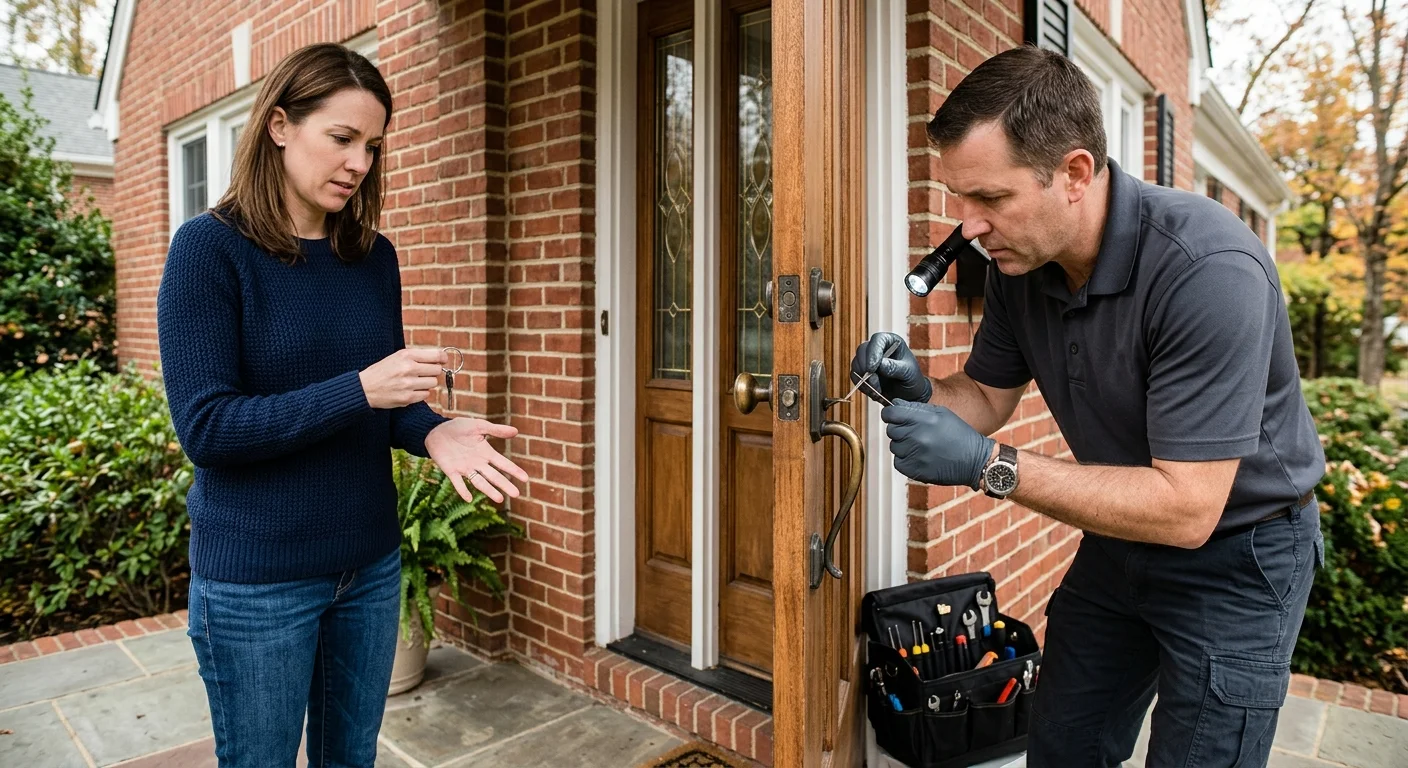
Start with the lock itself, not a general description of the door. Tell the locksmith whether it’s on a house, rental unit, garage, gate, or detached structure. Note whether you’re locked out or can still enter another way.
Take clear photos without removing the lock. Capture both sides, the door edge, and any visible manufacturer or model markings. Those details can help the locksmith prepare questions before inspecting the hardware.
Next, explain what happened to the key. A misplaced key, stolen key, and unreturned tenant key create different concerns. Say whether any duplicate still exists and whether that duplicate currently operates the lock. Don’t test a bent, cracked, or badly worn key if doing so could leave it stuck.
The setting also matters. An owner-controlled house in El Cajon presents a different scope than a Mission Valley condo with building-managed entrances. A Chula Vista rental may require coordination with the property owner or manager. Ask what identification or authorization the locksmith needs before work begins.
Don’t remove cylinders, trim, or internal parts to identify the lock. That can complicate the inspection and create a separate repair issue. A few photos and a clear description are enough for the first conversation. For broader steps after losing a house key, read our San Diego lost-house-key guide.
Why the original key may not settle every case
The original key is only one part of the assessment. Having it may help identify the current setup, but it doesn’t answer every question about the lock. Likewise, a missing key alone doesn’t prove that the entire lock must be replaced.
There isn’t one verified manufacturer rule covering every residential lock. Designs, available service options, and hardware conditions differ. We couldn’t confirm a universal rule saying every lock can be rekeyed without its original key. We also couldn’t confirm a rule saying none can.
The reliable answer comes from identifying the exact hardware. Current documentation from that lock’s manufacturer may provide model-specific guidance. When the model isn’t clear, a licensed locksmith can inspect it and explain the available choices. Avoid any blanket answer given before the lock has been identified.
California treats rekeying and originating keys as locksmith activities. The person performing that work must hold a valid locksmith company license, be registered as an employee of one, or qualify for an exemption. You can check a company or individual through the state’s Department of Consumer Affairs license search.
Local housing age doesn’t settle the question either. About 49.6% of homes in the city of San Diego were built before 1978. That citywide figure can’t identify the lock installed on one specific door. Renovations and individual hardware choices still require an on-site review.
Separate rekeying from making a replacement key
Rekeying and making a replacement key aren’t the same request. Rekeying changes the lock’s internal pins or tumblers so a different key operates it. Lock replacement installs new hardware instead.
A replacement-key request seeks another key for the lock’s current setup. If your goal is simply to regain entry, say that clearly. If your concern is that someone else might possess the missing key, state that too. The desired outcome helps the locksmith explain which options apply.
This distinction matters during the first call. “I lost the only key” describes what happened. It doesn’t explain whether you want access restored, a different key to operate the lock, or new hardware installed. Give both the problem and the result you want.
A licensed independent locksmith must still inspect the lock before confirming a rekey. Our lock rekey referral service can connect you with a local professional for that assessment. Swift Key San Diego doesn’t perform the physical work, set the professional’s price, or provide the workmanship warranty. You contract with and pay the matched locksmith directly.
Don’t ask for lock-disassembly instructions as a substitute for an inspection. Without confirmed model guidance, a do-it-yourself attempt can turn one decision into several unknowns. Keep the lock assembled and let the professional evaluate authorized work.
Check which doors share the missing key
List every door the missing key was known to operate. Check the front, back, side, garage-entry, gate, and detached-storage doors that you control. Don’t assume similar-looking locks use that same key.
Mark each door as confirmed, possible, or unrelated. A duplicate key can help confirm known matches, but don’t force it into an uncertain lock. If no copy remains, explain which doors you routinely opened with the missing key.
Shared buildings need another layer of sorting. Separate your unit door from entrances managed by a landlord, property manager, or association. A unit key might also have been carried beside a gate credential or another access device. Don’t assume one professional can authorize changes to every opening.
This step is especially useful across San Diego County’s varied property settings. A detached home in inland North County may have several owner-controlled exterior doors. A central San Diego condo may combine a private unit lock with shared access points. South Bay and coastal North County callers should make the same ownership distinction before approving work.
Give the locksmith the full list, including uncertain doors. The professional can then inspect each relevant lock and explain whether the requested key arrangement fits that hardware. Confirm the final scope before work starts. That prevents a discussion about one missing key from overlooking another affected entrance.
When replacement needs separate discussion
Lock replacement deserves a separate conversation when the inspection doesn’t support the requested rekey. It may also enter the discussion when the owner already wants different hardware or the locksmith identifies a condition needing another solution. Those are inspection findings, not conclusions to make from the missing key alone.
We couldn’t confirm a universal manufacturer rule based on lock age, a fixed number of past rekeys, or one visible symptom. Check current documentation for the exact product when its model is known. Otherwise, ask the licensed locksmith to identify the hardware and explain why replacement is being proposed.
Keep the rekey and replacement options distinct when reviewing the scope. Ask which locks were inspected, what work is recommended, and how many doors are included. Confirm what hardware, keys, and labor appear in the professional’s price before authorizing anything. Swift Key San Diego doesn’t set that price.
If replacement is recommended, our lock replacement referral page explains how we connect callers with independent local professionals. You can also review our rekey versus new locks comparison before discussing the choices.
Ask the locksmith whether any warranty applies to the proposed work or hardware. Any such warranty comes from the independent professional, not Swift Key San Diego. Keep the locksmith’s written scope and product details with your property records.
When to call us
Call when the original key is gone and you need a licensed professional to assess rekeying, key origination, or replacement. Swift Key San Diego is a referral service, so the independent locksmith inspects the lock and performs any authorized work. Call us at (858) 400-4082 and we’ll connect you with a licensed local locksmith.