A smart lock will fit your existing front door only when its requirements match the door and current hardware. Measure first, check the manufacturer’s installation template, and resolve any alignment problems before buying.
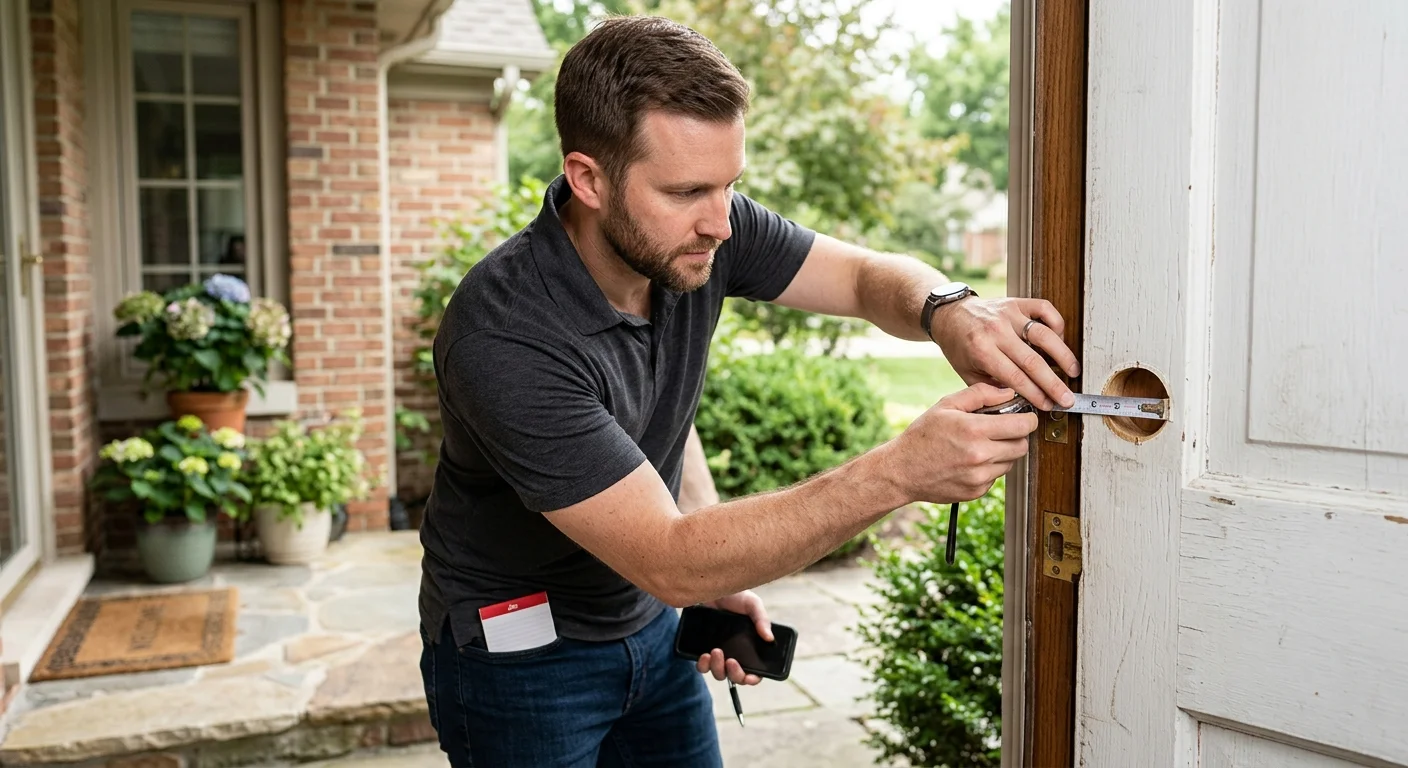
Measure the door before choosing a smart lock
Start by identifying every part the new lock would replace. Some products replace the exterior and interior deadbolt hardware. Others may use part of the existing setup. The manufacturer’s installation manual should show the exact arrangement.
Take clear photos of both door faces and the open door edge. Include the deadbolt, latch, strike plate, handleset, and nearby trim. Keep a ruler or tape measure visible where possible. These photos make later comparisons easier.
Record these details:
- Door thickness, measured from one face to the other
- Bore diameter, meaning the round opening through the door
- Backset, measured from the door edge to the bore center
- Distance between the deadbolt and any knob or handleset
- Bolt position on the door edge
- Strike position on the frame
- Hinge side and door swing
- Door material, if you can confirm it
Don’t identify the door material by appearance alone. A painted or wrapped surface may hide its construction. Check paperwork, an exposed edge, or ask a qualified professional.
About 49.6% of homes in the city of San Diego were built before 1978, according to the ACS figure documented for this site. That doesn’t determine whether a smart lock will fit. It does make direct measurement more useful than assumptions about a home’s age.
If you’re still deciding between a deadbolt, keypad, or another format, review the types of door locks used in San Diego. Choose the hardware category first. Then compare individual installation templates.
Match the bore, backset, and door thickness
Three measurements drive the first compatibility check: bore, backset, and door thickness. Write each one down exactly. Don’t round a measurement to match a product listing.
The bore is the opening through the door face. Measure across its widest point. The backset runs from the door edge to the center of that opening. Door thickness runs straight between the interior and exterior faces.
Next, download the manufacturer’s current template for the exact model and version. Product families can contain different configurations. Compare your measurements with the published range for that specific lock.
Don’t copy measurements from another brand’s packaging. For example, Schlage documents its residential B60 deadbolt for doors from 1-3/8 inches to 1-7/8 inches thick. That figure applies to the B60. It shouldn’t be treated as a universal smart-lock range.
Keyway compatibility is another buying decision. It doesn’t determine the bore size, but it can affect plans for an existing house key. Yale’s Assure Lock 2 specification lists a KW-1 5-pin keyway. It shouldn’t be described as compatible with a Schlage C house key. Kwikset documents the Halo with a SmartKey Security KW1 cylinder.
Check power requirements while reading the same documentation. Kwikset specifies four AA alkaline batteries for Halo and Halo Select. Its FAQ says not to use rechargeable or lithium-ion cells. Requirements for another model could differ, so follow that model’s instructions.
Once the physical measurements match, compare features in the smart-lock buying guide for 2026. A feature list can narrow your choices, but it can’t replace the door measurements.
Check deadbolt alignment before adding electronics
Test the existing deadbolt with the door open, then test it closed. Turn it from the interior without lifting, pulling, or pushing the door. Record any difference between the two tests.
If the bolt moves freely while open but resists when closed, don’t assume new electronics will change the door’s geometry. Note the position of the bolt and strike. Show that condition to the manufacturer or the locksmith before installation.
Use a simple alignment check:
- Close the door gently without locking it.
- Watch whether the door shifts as the latch meets the frame.
- Turn the deadbolt without adding pressure to the door.
- Note any scraping, sticking, or partial movement.
- Photograph the strike and bolt from several angles.
Don’t enlarge the strike opening or drill new holes based only on a general guide. The selected lock’s template controls its placement. Cutting first can leave you with a door that doesn’t match the hardware you eventually buy.
Also check the space around the interior thumb turn. A large handleset plate, glass panel, decorative trim, or raised molding may overlap the smart lock’s interior housing. Compare the full-size template against those nearby features. Check both the locked and unlocked positions shown in the instructions.
Confirm clearance on the door edge as well. The latch plate needs to match the model’s documented shape and placement. If the existing preparation differs, ask what alteration the installation requires before approving work.
This inspection separates two questions. The first is whether the lock fits the prepared openings. The second is whether the door and frame line up well enough for that model’s installation instructions. Both answers should be clear before purchase.
Plan for coastal exposure and exterior gates
A San Diego County address doesn’t tell you how exposed the lock will be. Inspect the exact doorway instead. Note direct rain, irrigation spray, ocean-facing exposure, full sun, shade, and any protective overhang.
For a property in Encinitas, Imperial Beach, or Coronado, record the conditions at the actual entrance. Do the same for a door in El Cajon, Santee, or another inland community. Location names alone don’t establish a product’s suitability.
Check the manufacturer’s documentation for:
- Which lock surfaces may face outdoors
- Any stated environmental limits
- Required covers or seals
- Cleaning and maintenance instructions
- Restrictions involving gates or exposed openings
- Battery and power requirements
No universal coastal-distance rule or corrosion timeline was confirmed in the approved research for this page. If the manual doesn’t address your doorway’s exposure, ask the manufacturer before buying. Don’t fill that gap with a salesperson’s guess or an unrelated product review.
Treat an exterior gate as a separate installation. Photograph both sides, the gate edge, the post, and the proposed strike location. Measure the opening and surrounding clearance. Record whether the gate is covered or directly exposed to weather.
Don’t assume that approval for a residential front door also covers an exterior gate. Ask whether the exact model is documented for that setting. If the manufacturer can’t confirm it, choose a product with instructions that address the planned location.
For rentals, condos, and managed communities, check the property’s written requirements before altering a door or gate. This page’s approved sources don’t confirm a single San Diego County rule for every property. The owner, manager, or association can identify the requirements that apply to that entrance.
When professional installation makes sense
Professional installation makes sense when the template doesn’t match the existing preparation. It’s also a practical choice when the bolt binds, trim blocks the housing, or the door needs new drilling.
Consider getting help when:
- The bore or backset falls outside the model’s published range
- The strike and bolt don’t line up
- The interior housing overlaps a handleset or molding
- The door has an unusual edge or decorative panel
- The lock is intended for an exterior gate
- You want the mechanical key to match existing locks
- The installation requires cutting or modifying the door
A locksmith can compare the door with the selected template and explain proposed changes. Ask for that explanation before work begins. The independent professional, not Swift Key San Diego, performs the installation, sets the price, and addresses any warranty terms.
California places locksmith licensing under the Bureau of Security and Investigative Services. Ask for the LCO and check a company or individual through the California Department of Consumer Affairs license search.
Before scheduling, collect the model number, installation manual, measurements, and doorway photos. Mention existing alignment trouble and exterior exposure. If you haven’t selected hardware, a professional can discuss compatibility without treating an unverified measurement as settled.
Our smart lock installation referral service connects San Diego County customers with licensed, independent local locksmiths. Swift Key San Diego doesn’t install locks or hold a locksmith license.
When to call us
Call when the measurements don’t match, the deadbolt binds, or the door needs modification for a keyless entry smart lock. Call us at (858) 400-4082 and we’ll connect you with a licensed local locksmith.