A Yale keypad that stays dark needs a different check than one rejecting codes. First, note whether it lights, reacts to touch, or makes any sound. Those observations narrow the problem without guessing at the failed part.
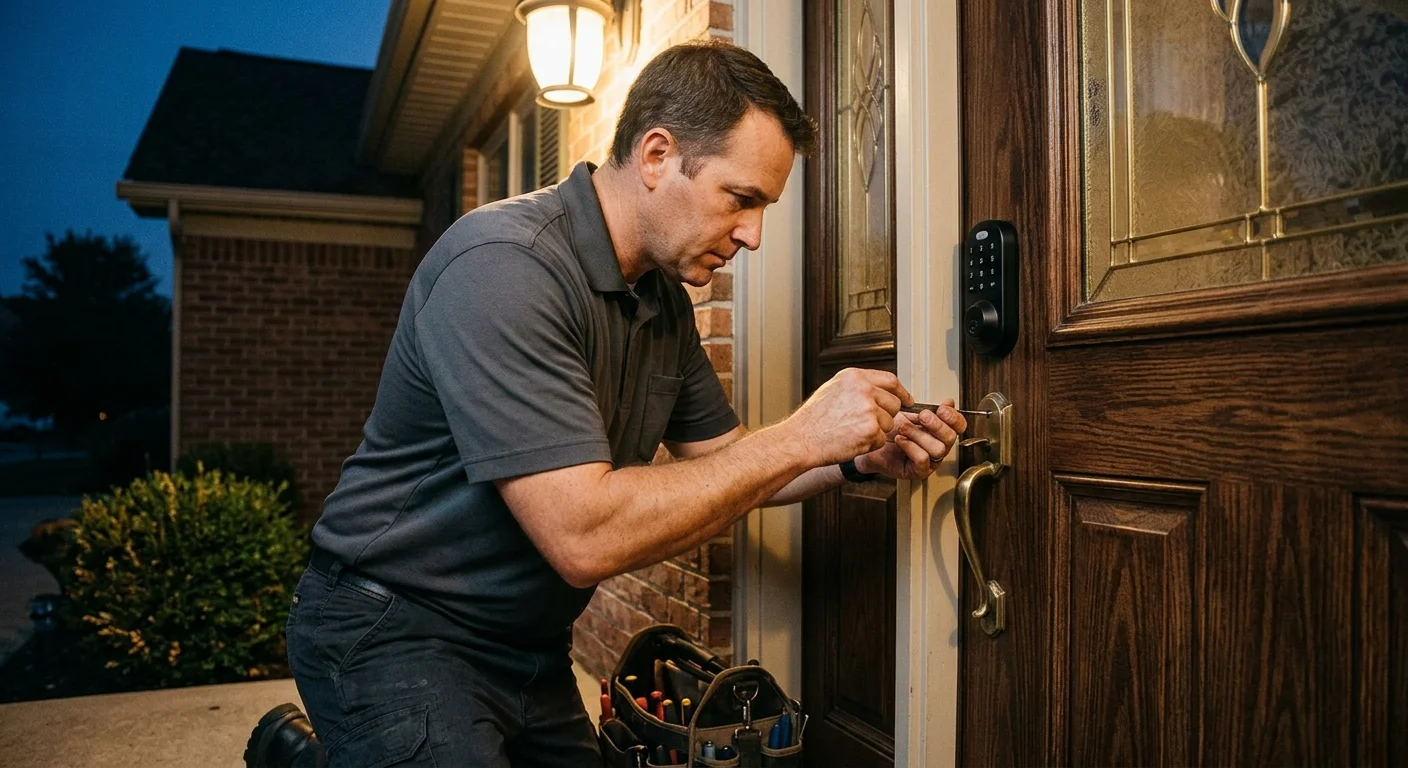
What a dark keypad usually means
A dark keypad tells you what isn’t happening outside. It doesn’t identify the failed part by itself. The lock may have a power issue, a connection issue, or another model-specific condition. Treat the blank screen as an observation, not a complete diagnosis.
Start by identifying the exact Yale model. Look for a label inside the battery cover or on existing paperwork. Don’t remove the mounted lock just to find it. Yale instructions aren’t interchangeable across every keypad lock, even when the exterior designs look similar.
Write down these details before changing anything:
- Does the keypad remain completely dark after the documented wake action?
- Does it react to one area but ignore another?
- Can you hear anything from the interior lock?
- Does the interior thumbturn move normally?
- Did the problem begin after batteries or settings were changed?
Take a clear photo of the keypad and its condition. If the display briefly lights, record which areas respond. These details are more useful than calling the entire lock dead.
Check the door from inside only when you’re already authorized to enter. Don’t take apart exterior hardware while standing outside. If the entrance belongs to a rental, condo, or managed property, contact the responsible manager before changing hardware or settings.
This page stays focused on the keypad. For problems involving the app, connection, bolt, or setup, use our broader Yale Assure lock troubleshooting guide.
Batteries, contacts and the false-dead lock
Begin with the battery label and instructions for your exact model. Use only the battery type Yale specifies there. Don’t copy a battery recommendation from a different Yale lock or an unrelated smart-lock guide.
If the manual permits battery access, keep the door open while checking the interior compartment. Confirm that every battery sits in the marked direction. Look for a battery that has shifted or isn’t seated evenly. If you’re replacing batteries, use a complete matching set that follows Yale’s instructions.
Next, inspect the holder without modifying it. Use a flashlight and look for visible residue, a cracked holder, displaced contacts, or a loose connection. Don’t scrape contacts, bend metal pieces, add liquid, or push exposed wiring. Photograph anything unusual and show it to a locksmith.
A “false-dead” lock is one that appears lifeless from the keypad even though the entire assembly hasn’t been diagnosed. If reseating or replacing the specified batteries makes the keypad return, note exactly what happened. That result helps distinguish a power-related event from an ongoing keypad failure. It doesn’t prove why power was lost.
If the keypad remains dark, stop repeating the same battery swap. Confirm that the batteries match the compartment markings and that the cover closes correctly. Then move to the model’s official troubleshooting instructions.
Don’t perform an undocumented reset as a power test. A reset changes configuration and can create a second problem. If you need more help separating a dead battery from a lockout, read our guide to a smart-lock battery failure while locked out.
Codes that stop working while the keypad still lights
A lit keypad that rejects a code isn’t the same problem as a dark keypad. The first has visible input activity. The second shows no visible response. Keep those symptom paths separate when you troubleshoot or describe the problem to a professional.
Enter one code you know should be current. Slow down and watch whether each intended press registers. Don’t repeatedly try several remembered versions. Instead, confirm the code with the person who manages the lock.
Ask whether anyone recently changed its settings or access codes. If the lock is managed through an app, rental account, or property system, check the authorized account history. Follow only the administration steps documented for that exact Yale model.
Avoid a factory reset unless you’ve reviewed Yale’s instructions and are prepared to configure the lock again. Resetting isn’t a neutral keypad test. It changes the lock’s stored setup.
Pay attention to the sequence:
- The keypad lights but doesn’t register every press.
- Every press registers, but the code is rejected.
- The code appears accepted, but the bolt doesn’t move.
- The bolt moves with the door open but not when closed.
Report the sequence without naming a failed component. Each pattern gives the locksmith a clearer starting point. It also prevents a code problem from being mistaken for a dead keypad.
Treat auto-lock behavior as a separate symptom. Note what the keypad does, what the bolt does, and whether the door is open or closed. Don’t assume one setting explains every failure.
Getting in right now
Use the least invasive authorized entrance available. Check for another door you may legally enter, an approved spare key, or help from the property manager. Don’t force the keypad, pry the trim, or follow bypass videos.
If your Yale lock has a physical key cylinder, use only its matching key. The Yale Assure Lock 2 specification identifies a KW-1 5-pin keyway. Don’t assume a Schlage C house key matches it, and don’t force an unfamiliar key into the cylinder.
Some online instructions describe exterior emergency-power procedures. Don’t assume a method written for another Yale model applies to yours. Identify the model and follow its Yale documentation exactly. If the exterior has no feature matching those instructions, stop instead of improvising.
When you’re already inside, leave the door open during basic checks. That prevents a successful test from becoming another lockout. Don’t remove the lock body unless the model instructions direct you to do so and you’re equipped to restore it correctly.
If no approved entrance works, a licensed locksmith can evaluate the lock and verify the appropriate access method. Our home lockout referral service can connect you with an independent local professional serving San Diego County.
Before calling, collect the model label, photos, and your symptom notes. Say whether the keypad is dark, partly responsive, or accepting input without opening. Also mention whether you have the correct physical key and whether the door can be tested from inside. Those details keep the request focused on the actual Yale keypad problem.
When the lock body, not the keypad, is the fault
A responsive keypad doesn’t prove the remaining lock assembly works correctly. If the keypad registers input but the bolt doesn’t move, describe both events separately. Don’t order a replacement keypad based on that symptom alone.
If you’re already inside, test the lock only with the door open. Watch the bolt while using the documented keypad procedure. Then check whether the interior thumbturn moves without unusual resistance. Stop if hardware binds, shifts, or needs extra force.
The open-door result matters. A lock that responds differently when the door closes needs an inspection of the complete installation. The keypad may be receiving input while another part prevents normal operation. A locksmith can inspect the bolt, strike area, mounting, connections, and lock body without assuming the keypad caused everything.
San Diego County properties also have different approval paths. A homeowner in East County may control the whole entry. A South Bay condo or central San Diego rental may involve a manager or association. Confirm who can authorize hardware changes before scheduling replacement work.
If the lock needs removal, adjustment, or replacement, consider a professional smart-lock installation assessment. California locksmiths are regulated by BSIS, and you can confirm a professional’s current status through the state license search.
Replacement shouldn’t begin with a guess. Give the professional the exact model, observed keypad behavior, battery markings, and open-door test result. That information helps determine whether the problem belongs to the keypad, power path, mounting, bolt, or complete lock assembly.
When to call us
Call when the keypad stays dark after documented battery checks, a valid code won’t open the door, or the lock body needs inspection. We refer customers to licensed, independent locksmith professionals, and the customer contracts with the professional directly.
Call us at (858) 400-4082 and we’ll connect you with a licensed local locksmith.