A front door can appear unlocked yet remain closed. Check what the key, thumb turn, deadbolt, latch, and handle actually do, without forcing any part. Those details help a key locksmith understand the symptom before inspecting the door.
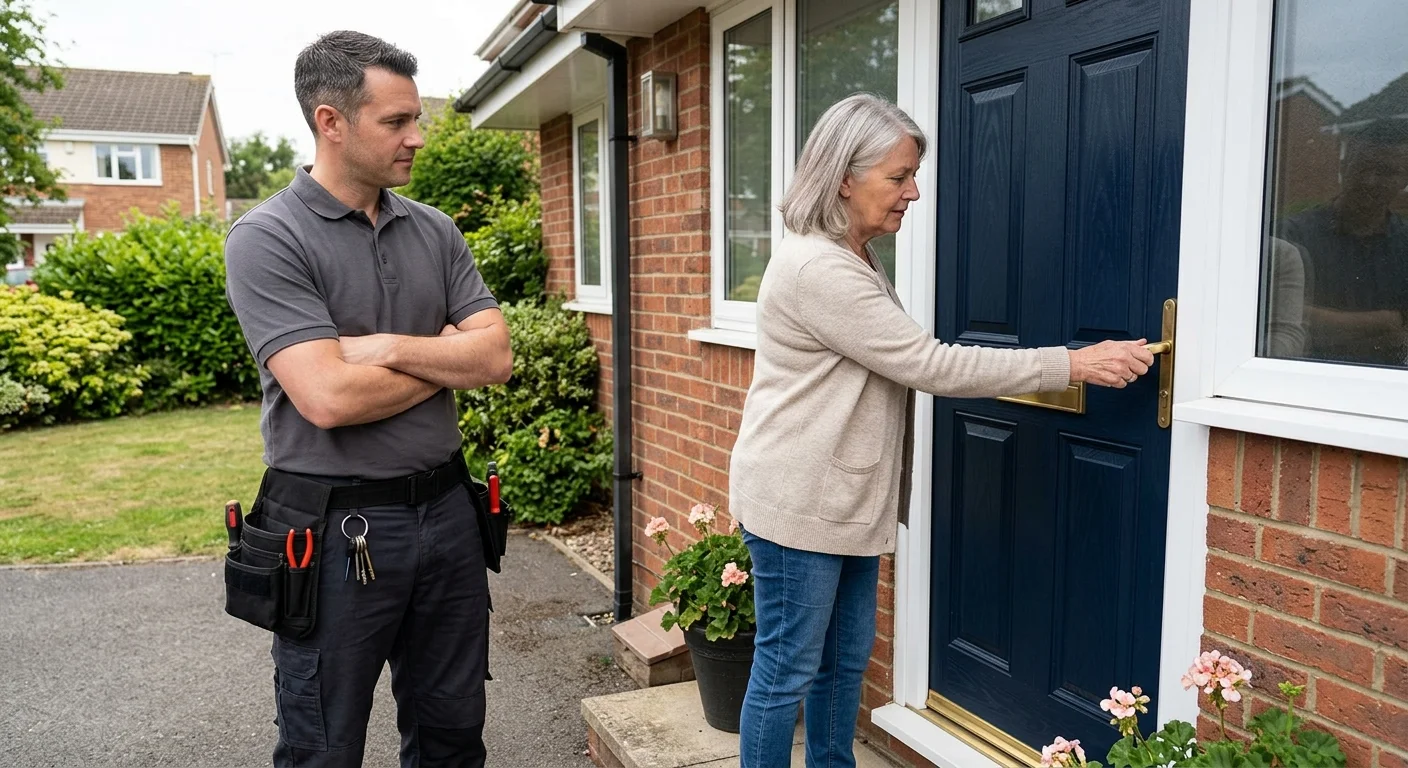
Confirm what the key and thumb turn do
Start with what you can observe during normal use. Use only a key you’re authorized to use. Insert it normally, then turn it once in the usual unlocking direction.
Pay attention to the movement. Does the key complete its usual turn? Does it stop early, feel loose, or return to its starting position? A key that moves doesn’t always tell you what the rest of the door hardware is doing. Report the movement without assigning a cause.
If you already have lawful access from another entrance, check the inside thumb turn. Move it only through its normal range. Note whether it reaches the position you associate with unlocked. Don’t remove trim, covers, screws, or handles.
This symptom differs from a key that won’t rotate at all. Our guide to a door key that won’t turn covers that separate situation. Here, the important detail is that the key or thumb turn moves, but the door remains shut.
A useful description sounds like this: “The key turns normally, but the handle won’t release the door.” Another might be: “The thumb turn reaches the unlocked position, but pulling the door changes nothing.”
If you’re outside, don’t keep cycling the key. One careful check is enough. Confirm that you have the correct key and door, especially at apartments, condos, and buildings with similar entrances. Then record exactly what happened.
Separate the deadbolt from the latch
Treat the deadbolt and latch as separate observations. The deadbolt is usually controlled by the key or inside thumb turn. The latch is usually controlled by the knob, lever, or handle. Don’t assume that moving one means the other has released.
First, note which control you operated. Then try the handle through its normal motion. Does it move as expected, stop partway, or move without changing the door? Listen for ordinary movement, but don’t insert tools or try to reach inside the door.
If there are two keyed locks, identify which keyway you used. If there’s a thumb turn plus a separate handle lock, record both positions. A clear account helps the locksmith inspect the correct part first. It also prevents “unlocked” from becoming an unclear description.
The phrase “key turns but door stays locked” can describe several different observations. Sometimes the caller means the deadbolt control moved. Sometimes the handle still feels locked. Other callers mean everything moves, yet the door won’t leave the frame. A locksmith needs the exact version you’re experiencing.
If the deadbolt itself won’t reach its normal locked or unlocked position, see our deadbolt troubleshooting guide. Don’t copy steps that don’t match your symptom.
If you reach the interior through another authorized entrance, don’t shut the problem door merely to repeat the test. Leave it as found and explain which controls you checked. A matched locksmith can inspect the complete door before recommending authorized work.
Check door pressure without forcing hardware
Use only the light pressure involved in normal door operation. While operating the handle normally, pull the door gently toward you. If that changes nothing, try a gentle push. Stop if the door, key, thumb turn, or handle resists.
Don’t shoulder the door, kick it, pry around its edge, or strike the hardware. Don’t slide objects between the door and frame. These aren’t needed to describe the symptom, and they aren’t part of a safe homeowner check.
Notice whether ordinary pressure changes anything. Does the handle move differently while you pull? Does the key feel different while you gently push? Does the door move slightly before stopping? Report the observation, but don’t diagnose the latch, hinges, frame, or alignment from that result.
Look only for conditions visible from your side. A mat, package, or other visible object may explain why the door can’t swing through its path. Don’t reach through gaps or remove building hardware.
Door age alone doesn’t identify the problem. About 49.6% of homes in the city of San Diego were built before 1978, but that figure can’t tell you what’s happening at one entrance. The installed hardware and the current symptom still need direct inspection.
If the front door stuck after unlocking and you have no other authorized entrance, treat it as a home lockout. Tell the locksmith that the key moves and the door stays closed. That distinction matters when you describe the request.
Record which side and access point are affected
Before calling, write down what happened in plain language. A short, accurate symptom record is more useful than a guessed diagnosis.
Include these details:
- Whether you’re inside, outside, or able to reach both sides
- Whether the key turns fully, partly, loosely, or not at all
- Whether the thumb turn reaches its usual unlocked position
- Whether the knob, lever, or handle moves normally
- Whether gentle pushing or pulling changes the movement
- Whether the issue affects the unit door, a shared gate, or another entrance
- Whether another authorized entrance remains usable
For an apartment or condo, identify the exact access point. A private unit door isn’t the same request as a lobby door, parking gate, or shared corridor entrance. If the affected entrance is shared, contact the property manager or building representative and follow the property’s access process.
Photos can help when they show the door and hardware without exposing sensitive information. Don’t send access codes or detailed key images. If you record a short video, show only the normal movement you already observed. Don’t stage another lockout or force the door for the recording.
Give the correct San Diego County address and explain where you can safely meet the locksmith. Also be ready to explain your authority to access the property. If ownership, tenancy, or permission may be unclear, settle that before requesting work.
Swift Key San Diego serves San Diego County as a referral service. Clear location and access details help us match your request with an independent local professional who handles the relevant type of door work.
When a locksmith should inspect the door
A licensed locksmith should inspect the entrance when the controls appear unlocked but the door remains shut. Inspection also makes sense when normal handle movement stops, the symptom keeps returning, or the affected door is your only authorized entrance.
Don’t decide from a distance that the latch, deadbolt, frame, hinges, or alignment must be replaced. Similar descriptions can come from different conditions. The locksmith needs to see how the full door operates before recommending repair, opening, adjustment, or replacement work.
If replacement becomes an option, ask why the existing hardware can’t remain in service. You can also review what a lock replacement service covers before discussing the work. Don’t approve a solution based only on a phone diagnosis.
Ask the locksmith to explain the proposed work and price before authorizing it. Swift Key San Diego doesn’t set prices, collect payment for the professional, or provide warranties. You contract with and pay the independent locksmith directly.
California locksmiths must be licensed through the Bureau of Security and Investigative Services. You can check a company or professional through the state’s license search. Confirm that the listing matches the person or company handling your request.
Swift Key San Diego matches callers with licensed, independent local locksmiths. We don’t perform locksmith work, employ technicians, own service vehicles, or diagnose doors remotely. The matched professional inspects the entrance and discusses authorized options with you.
When to call us
Call when your key or thumb turn appears to unlock the front door, but normal handle movement still won’t open it. This needs a licensed professional when safe, ordinary checks don’t resolve the lockout.
Call us at (858) 400-4082 and we’ll connect you with a licensed local locksmith.