A push bar that drags, sticks, or won’t latch needs a licensed locksmith’s inspection. San Diego property managers searching for push bar repair should document the symptoms, stop improvised fixes, and keep the device available for a proper assessment.
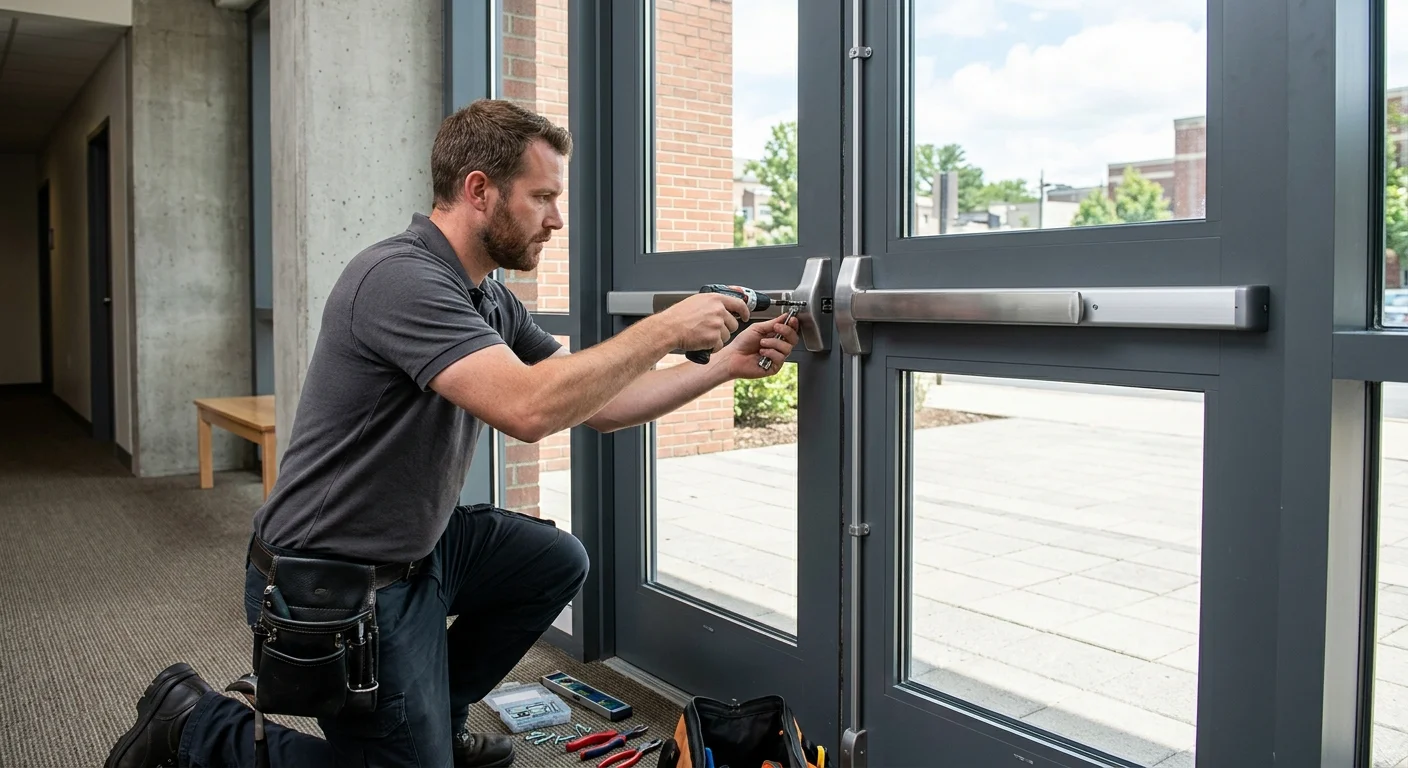
Panic bar repair can involve the device, strike, door, frame, or related hardware. The right next step depends on what the locksmith finds at that specific opening.
How an exit device is supposed to behave
Start with what people experience at the door. Press the horizontal bar, move the door, release the bar, and let the door close. Record whether the door releases, whether the bar returns, and whether the latch catches without anyone lifting, pulling, or slamming the door.
Repeat that observation from the center and both ends of the bar. Don’t remove covers or adjust internal parts. The goal isn’t to diagnose the hardware. It’s to give a licensed locksmith a clear description.
Note each symptom separately:
- The bar moves, but the door stays caught.
- The door opens, but the bar remains depressed.
- The bar returns, but the door doesn’t latch.
- The latch meets the strike only when someone lifts the door.
- The door latches after a hard pull or slam.
- One end of the bar moves differently from the other.
- The problem changes when the door is held at another angle.
These details help separate a repeatable fault from an occasional complaint. They also prevent vague requests such as “the back door is broken.”
Don’t treat one successful test as proof that the opening is fine. Instead, report what happened during each attempt. A locksmith can then inspect the complete opening rather than focusing only on the visible bar.
This page covers repair decisions, not California exit-device rules. For that separate issue, read our guide to panic bar and exit device requirements and confirm the current requirements with the fire authority serving your address.
The failures that show up first
Many push bar repair calls begin with a small change in how the door feels. Staff may notice extra resistance, a delayed return, an uneven bar, or a latch that catches only after another pull. Write down that first observable change.
Don’t decide that the bar itself has failed based on feel alone. A licensed locksmith may need to inspect the bar, latch, strike, fasteners, hinges, closer, door position, and frame. Similar symptoms can point to different parts of the opening.
Watch the door during ordinary use, without forcing it. Note whether the problem happens when opening, closing, or both. Also record any recent event that may matter, such as a delivery impact, door work, hardware adjustment, or a change in how the door sits. If you don’t know, say so.
Storefront doors deserve a full-opening review. A latch complaint can exist alongside movement or alignment concerns elsewhere on the door. Our guide to storefront door lock repair in San Diego explains how to describe those related symptoms without guessing at the cause.
Take clear photos of the full interior door, the bar, the latch edge, the strike, and the top and bottom gaps. A short video can show the movement that a still photo misses. Don’t post keys, access codes, alarm details, or restricted areas in those images.
Never chain, block, tape, wedge, or disable the exit device while troubleshooting. Don’t remove the bar and leave the opening in service. If the door’s condition creates an immediate concern, follow the property’s established safety procedure and contact the authority responsible for that location.
Why a broken panic bar is an immediate compliance problem
A broken exit device creates more than a hardware complaint. Once the opening’s intended operation is uncertain, the property manager can’t settle the issue by assuming the next user will pull harder or know a workaround.
Treat the condition as unresolved until the appropriate professional evaluates it. Don’t label the door compliant based on an online checklist. The answer can depend on the address, property use, door, and current requirements. Those details need review by the relevant local authority or another qualified professional.
San Diego County includes the city of San Diego, incorporated cities, and unincorporated communities. When asking for guidance, identify the exact address and property use. A retail space in Chula Vista, an office in Kearny Mesa, and a warehouse near Otay Mesa shouldn’t be reduced to the same vague description.
Avoid homemade measures that change the device’s operation. Don’t hold the latch retracted with tape. Don’t add a chain or padlock. Don’t prop the door in a way that hides the failure before an inspection. Those steps can obscure the original symptom and interfere with a useful assessment.
This article doesn’t restate code sections, occupancy thresholds, or fire-marshal rules. Those details aren’t confirmed for your specific opening here. Use the linked requirements article as background, then ask the fire authority serving the property to confirm what applies now.
The repair record should show when the issue was reported, what users observed, which opening is affected, and what action was requested. Keep the licensed locksmith’s findings and any authority direction with the property’s maintenance records.
Repair, rebuild, or replace
A licensed locksmith should base the recommendation on an inspection, not a photo alone. Ask for the findings in plain language. The explanation should identify the affected component, the condition of the surrounding opening, and the proposed scope.
Repair may be discussed when the locksmith identifies a specific serviceable problem. Ask which component would be adjusted or changed. Also ask how the door and strike affected the recommendation.
A rebuild may be considered when the device can remain in place but needs internal service or compatible components. Don’t assume every device has the same rebuild path. The locksmith needs the maker, model, configuration, and present condition before confirming that option.
Replacement may be recommended when repair isn’t suitable or compatible parts can’t be confirmed. The proposed replacement should be evaluated for that door and opening. Our lock replacement service page explains how we connect callers with licensed local professionals who can inspect replacement needs.
A new panic bar installation is a separate scope. That matters for a newly prepared opening, a changed door, or a device being replaced with another configuration. For panic bar installation in 91914 or elsewhere in San Diego County, don’t buy hardware from a photo or width estimate alone. Let the licensed professional confirm the opening and tell you what information the local authority needs.
Ask for separate explanations when other door work is proposed. A bar problem, strike concern, closer issue, and door alignment concern shouldn’t be blended into one unexplained line item. Prices couldn’t be confirmed from the approved sources for this page. Swift Key San Diego doesn’t set them. Confirm the scope and current price directly with the independent locksmith before authorizing work.
No repair choice should rely on promises made by this referral service. The customer contracts with and pays the independent professional directly. Ask that professional about workmanship terms, product documentation, and any limits that apply to the proposed work.
What a licensed locksmith needs to know before coming out
Begin with the property’s exact address and the door’s location. “Rear employee exit beside the loading area” is more useful than “back door.” For a building with several similar openings, assign a door number or another clear identifier.
Then provide a short symptom report:
- What happens when the bar is pressed
- Whether the bar returns after release
- Whether the latch catches when the door closes
- Whether lifting, pulling, or slamming changes the result
- Whether the problem is constant or intermittent
- Whether visible hardware is loose, bent, missing, or damaged
- Whether another contractor recently worked on the door
Share the manufacturer and model only if they appear on an accessible label. Copy the text exactly. Don’t guess from the device’s color or shape. Include photos with a ruler or tape visible when the locksmith requests measurements.
Mention connected systems without exposing sensitive details. Tell the locksmith whether the opening interacts with access control, an alarm, electrified hardware, or another building system. Don’t send passwords, access codes, or alarm instructions in an ordinary message.
Explain the property use in plain terms, such as shop, restaurant, office, school, apartment common area, or warehouse. Don’t decide the legal occupancy category yourself. If an authority has already given written direction, provide that document to the locksmith.
Swift Key San Diego is a referral service. We match callers with licensed, independent local locksmiths, while the selected professional inspects and performs the work. You can review a provider through California’s BSIS license search before authorizing service.
Our commercial locksmith service covers the referral process for business hardware concerns. We don’t set prices, make repair findings, perform installations, or provide warranties. Discuss those items directly with the professional you hire.
When to call us
Call when a commercial push bar drags, sticks, stays depressed, or fails to latch, and you need a licensed local professional to assess repair or replacement. Call us at (858) 400-4082 and we’ll connect you with a licensed local locksmith.