When a business door stays open, first identify which component seems involved. A commercial locksmith is the right first call when the lock or latch hardware appears involved. Frame, hinge, glass, closer, or access-control work may require another provider.
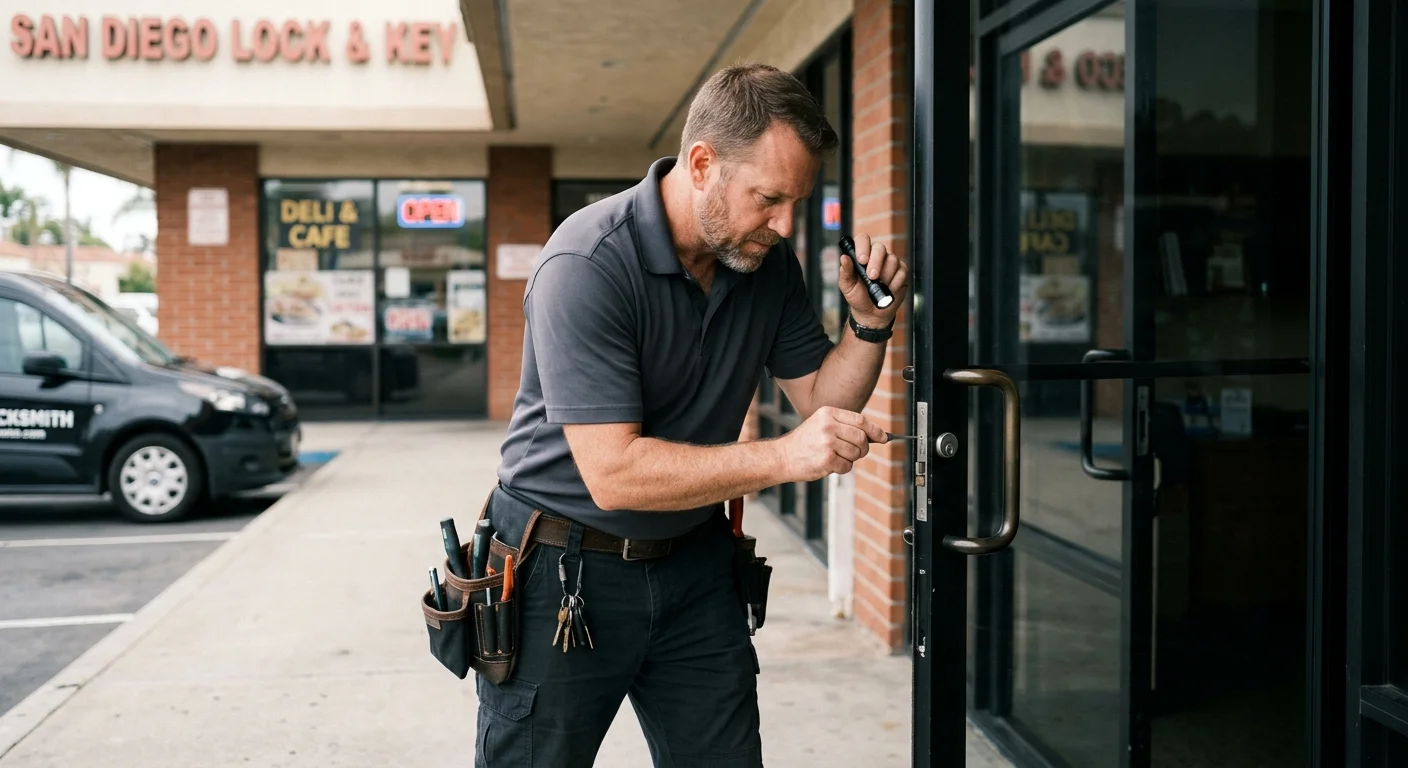
Separate the lock from the latch and closer
Start with what the door does, not a remote diagnosis. “The door won’t close” can describe several different symptoms. Clear details help a provider decide whether the request fits its approved scope.
Watch the door through one normal closing cycle. Note where movement changes:
- Does the door stop before reaching the frame?
- Does it reach the frame but remain unlatched?
- Does the latch touch the strike instead of entering it?
- Does the key turn while the door is open?
- Does the lever or handle move normally?
- Does the door return after someone releases it?
- Is an electronic reader, keypad, or powered lock involved?
These observations separate the visible symptoms. They don’t prove which part has failed. A lock or cylinder problem may fit a commercial locksmith request. A door that stops well before the latch reaches the strike may need assessment by a door, frame, hinge, glass, or closer provider.
Don’t describe every metal part as “the lock.” Tell the provider which part you touched and what happened. Photos of the latch edge, strike area, hinges, closer, and full doorway can add useful context.
Also explain whether the door is aluminum-framed glass, solid metal, wood, or another type. Give the exact San Diego location and entry instructions. A storefront in Chula Vista, an office in Mission Valley, and a gated property in Kearny Mesa may present different access details, even when the reported symptom sounds similar.
Check whether the door closes but won’t latch
A commercial door that reaches the frame but won’t stay closed has a narrower symptom. Close it normally and observe the latch area from a safe position. Don’t force the handle, key, or door into place.
Tell the provider whether the latch enters the opening in the strike. Note whether it touches above, below, or beside that opening. Also check whether the result changes when the door is locked or unlocked. These details help the provider assess the request without treating your observation as a diagnosis.
Try the same observation from inside and outside only if you can do so without disrupting customers or controlled access. Record whether pushing, pulling, or lifting the door changes the result. Don’t make adjustments before the provider confirms the scope. A changed screw position or moved strike can hide the original symptom.
If the key turns but the door won’t stay shut, say that plainly. If the key won’t turn, the cylinder spins, or the handle doesn’t move the latch, include those details too. A locksmith can then determine whether inspection of the lock, cylinder, latch, or related hardware belongs in the authorized job.
Replacement isn’t an automatic answer. The independent locksmith should inspect the relevant hardware before recommending lock replacement. You can ask what was examined, what part is being proposed, and what result the proposed work is intended to address.
For aluminum-framed retail entrances, our guide to storefront door lock repair in San Diego covers a more specific lock-focused situation.
Identify frame, hinge, glass, and hardware limits
A locksmith’s presence doesn’t make every door component part of the locksmith job. Before authorizing work, ask the provider to name the components included in the written scope. That boundary matters when several parts meet at the same edge of the door.
Visible frame damage should be reported as frame damage. Loose, bent, or displaced hinges should be described exactly that way. Cracked glass, movement around a glass panel, or a loose glazed section should be disclosed before anyone starts. The locksmith can decide whether the lock-related portion can be assessed, but you may need a door contractor, hinge specialist, or glass provider for other work.
Treat the closer as a separate line item. Tell the provider whether it appears connected, loose, leaking, or physically damaged. Don’t assume every commercial locksmith services every closer. Ask whether closer work is offered and included before approving it.
The same rule applies to powered hardware. A reader, keypad, electric lock, door operator, alarm contact, and building access system may involve different providers. Report each component you can see. Don’t ask a locksmith to accept responsibility for an entire system without confirming that scope.
Exit hardware also deserves precise language. A horizontal push device isn’t the same request as a keyed storefront cylinder. If that device is involved, read the separate guide to panic bar repair in San Diego before calling.
This page doesn’t assign fire, accessibility, exit, insurance, or building-code requirements. Those rules couldn’t be confirmed for a specific property from the approved information available here. Ask the local authority with jurisdiction, property manager, insurer, or qualified building professional which requirements apply before authorizing related changes.
Document access and security concerns
Give the provider a short, factual record of the problem. Begin with the exact door and its location. “Rear delivery entrance beside the loading area” is more useful than “back door.” For a multi-tenant property, include the suite and the person authorized to approve work.
Capture these details before the call:
- The door material and general style
- The side where the problem is most visible
- Whether the door reaches the frame
- Whether the latch enters the strike
- What happens when the key turns
- Any visible damage to the lock or surrounding parts
- Any connected keypad, reader, or powered hardware
- Who controls the property and authorizes the work
Take a full-door photo and closer photos of the affected areas. A short video may show the closing motion better than a written description. Keep keys, access codes, employee names, and other sensitive information out of shared images.
State the business impact without overstating the diagnosis. Explain whether the entrance is used by customers, staff, deliveries, or tenants. Say whether another authorized entrance is available. If the property has internal procedures for access or closing, tell the responsible manager and follow those procedures.
Don’t promise employees or tenants that one visit will resolve every component. The correct provider may need to inspect the door before defining its portion. A locksmith can address an approved locksmith scope. Other visible concerns can be assigned separately after the responsible provider identifies them.
If the condition followed forced entry or visible damage, disclose that history. The guide to a business door damaged after a break-in can help organize that separate situation without assuming which repairs are required.
Confirm the locksmith’s approved scope
Before work begins, ask the independent locksmith to describe the proposed task in plain language. The scope should identify the door, the relevant hardware, and the requested result. It should also separate included locksmith work from excluded door, frame, glass, hinge, closer, electrical, or access-control work.
Useful scope questions include:
- Which component will you inspect?
- Which component do you propose repairing or replacing?
- Is closer work included?
- Is access-control work included?
- Are frame, hinge, or glass issues outside your scope?
- Who approves added work if another issue appears?
- What terms apply to the work you perform?
- What documentation will I receive?
California locksmith activity is regulated by the Bureau of Security and Investigative Services. A company must hold the applicable license, employ properly registered locksmith personnel, or qualify for a statutory exemption. You can check a company or individual through the state’s license search before authorizing locksmith work.
Swift Key San Diego is a referral service. We match callers with licensed, independent local locksmith professionals. We don’t perform repairs, employ locksmith crews, set the professional’s price, or provide the professional’s warranty. You contract with and pay the matched professional directly.
Confirm the price and payment terms with that professional before work starts. No verified market rate for this specific commercial door problem appears in the approved claims available for this page. The locksmith sets the price for the authorized locksmith scope, while other providers set prices for their own work.
Keep the final scope tied to the original symptom. If the request expands from a latch issue into frame, glass, closer, or electronic-system work, pause and identify who is responsible for each part.
When to call us
When the lock, cylinder, latch, or related commercial hardware appears involved, the work needs a licensed locksmith professional. We’ll match you with an independent local provider, while you confirm the scope and terms directly with that professional. Call us at (858) 400-4082 and we’ll connect you with a licensed local locksmith.